The world is loud
Notifications ping. Thoughts race. Bodies stay braced — even when we’re sitting still. For many of us, the nervous system has been in survival mode for so long that “relaxed” starts to feel like a foreign language.
If that sentence landed somewhere soft inside your chest, this is for you.
I’m Clare, and I work with people whose systems feel like they’ve been holding their breath for years. Through Emotional Release Therapy, crystal-supported stress relief, somatic grounding, and especially sound, we create small, safe moments where the body can finally exhale.
Today I want to talk about one of the gentlest — and most powerful — ways I’ve seen nervous systems remember safety: sound.
Why sound feels like medicine to an overwhelmed body
Unlike talking therapies that sometimes ask the thinking mind to lead, sound travels straight past the analytical brain and speaks directly to the nervous system.
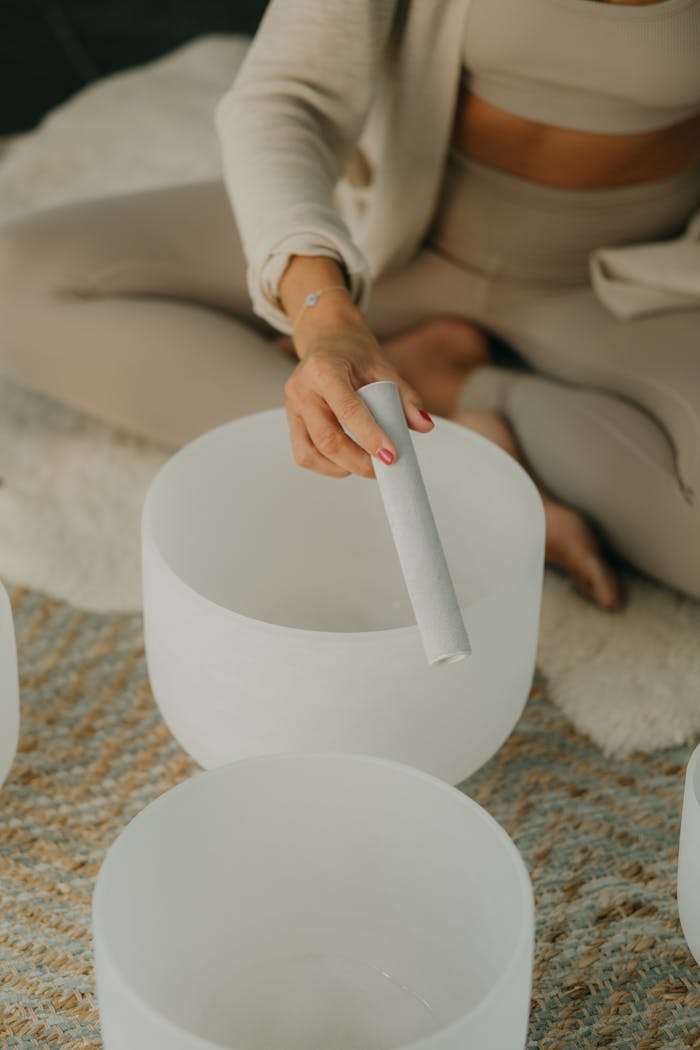
The low, slow hum of a crystal singing bowl tuned to the root chakra…
The shimmering ripple of a Tibetan bowl played lightly around the heart…
The oceanic pulse of a rainstick or gentle chimes…
These vibrations create something called entrainment — the body’s rhythms naturally begin to match the steady, predictable pattern of the sound. Heart rate slows. Breath deepens. The vagus nerve (our body’s built-in “calm down” switch) gets a gentle nudge.
For people carrying anxiety, grief, burnout or high sensitivity, this matters deeply.
When words feel too big or too exposing, sound offers a non-verbal pathway home.
A tiny real-life moment from a recent sound bath
A client (let’s call her Sarah) arrived saying she hadn’t slept properly in months. Her shoulders lived somewhere near her ears, her jaw was tight, and she apologised three times for “not being able to relax properly”.
We didn’t try to fix anything.
We simply lay on mats in a softly lit room. I played a sequence starting with very low, grounding tones — root and sacral chakra bowls — then slowly layered in heart tones and higher, clearing frequencies.
About 18 minutes in, I noticed her breathing change. Not dramatic — just longer exhales. Then her hands, which had been clenched, slowly opened, palms facing up.
Afterwards she whispered:
“I didn’t realise I was allowed to just… exist… without bracing.”
That’s the quiet revolution I see again and again.
You don’t need a full sound bath to start feeling the benefit
Here are three small ways to invite sound medicine into your day (no equipment required):
1. Humming your exhale
Close your mouth gently, inhale through the nose, then hum softly on the exhale for 6–10 seconds. The vibration stimulates the vagus nerve. Repeat 4–6 times. Many people feel their shoulders drop after just 2 rounds.
2. Nature as your sound bowl
Sit near running water, wind in trees, or birds at dawn. Let the sounds wash over you without analysing them. The irregular-yet-organic rhythm is surprisingly regulating for a wired system.
3. One intentional note
If you have access to any bowl, bell, tuning fork or even a phone app with crystal bowl recordings — play one single sustained note and simply listen. No multitasking. Just presence. Let the sound hold you for 60–90 seconds.
An invitation
You don’t have to earn rest.
You don’t have to talk your way into calm.
Sometimes the most profound healing begins when we let the body listen to something steadier than our thoughts.
If this resonates and you’d like to experience it in a held, one-to-one space, I offer private Calm-First Sessions (in-person in Randalstown, Co. Antrim or online UK-wide) and occasional small-group sound baths.
You’re welcome exactly as you are — tense shoulders, racing mind and all.
With gentleness,
Clare
Unity With Clare