Sound Bath Nervous System Reset 2026 ~ Free 5 Mins Unity With Clare & Oscar
Sound Bath for Grief & Nervous System Care — today, 8th June, would have been my mummy’s birthday. Grief has its own calendar; it lives in the body as much as in the mind. On days like this, the ache can feel louder, the world a little sharper, and the question of how to carry on can sit quietly in the chest.
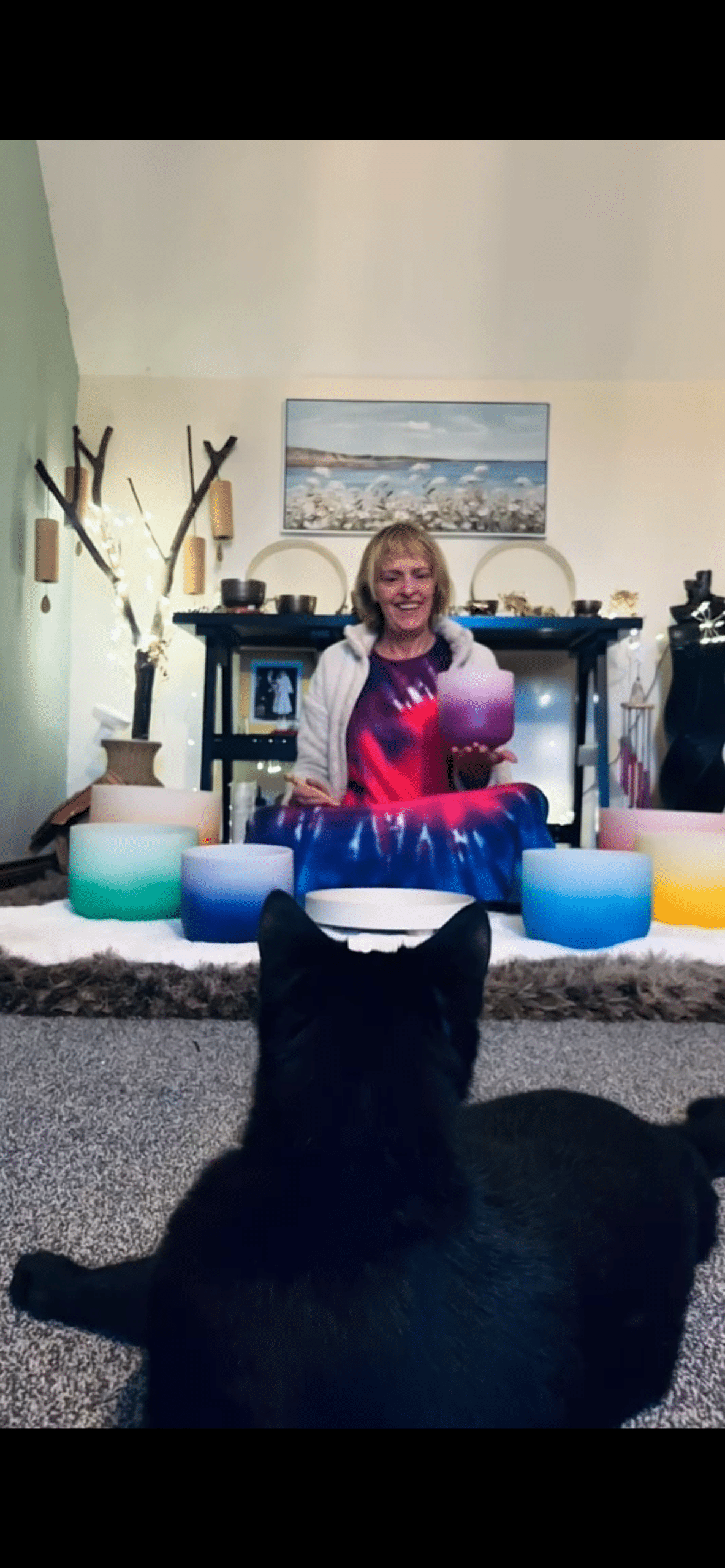
I wanted to create something gentle and real for this day: a free 5‑minute sound bath recorded in my therapy room, offered in honour of my mummy and for anyone whose body is carrying loss. No script. No staging. Just the bowls, my breath, and the truth of what it feels like to love someone who is no longer here.
A 5‑Minute Sound Bath for Grief — Simple, Gentle, and Easy to Receive
If you’ve never experienced singing bowls before, think of this sound bath as a soft blanket of sound. The bowls create long, steady tones that your body can lean into. You don’t have to “do” anything or understand the science — you simply listen, breathe, and let the sound move around you.
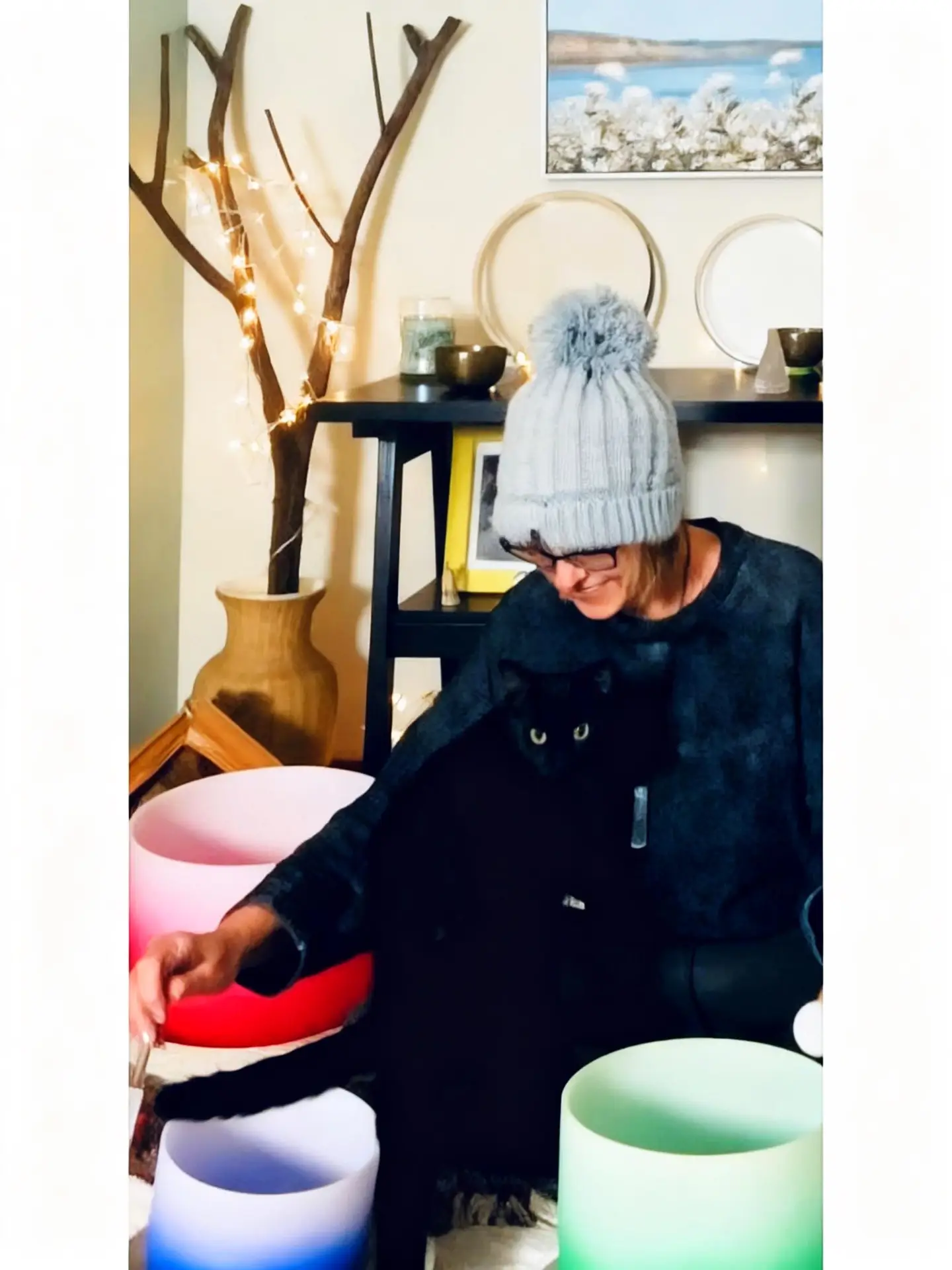
At the very beginning of the recording, Oscar — my little kitten and unexpected assistant — hops onto my lap after the first bowl vibration, gives me a tiny kiss, and wanders off again. At the end, he rolls about, waiting for belly rubs. 🥰 I kept these moments in because grief is like that: heavy and tender, painful and playful, love and loss sitting side by side.
How Grief Shows Up in the Body
Grief is not just “in your head.” Research over recent years has continued to show that loss can affect the whole body — our heart rate, sleep, digestion, immune system, and even how we breathe. Intense grief has been linked with higher stress hormones, changes in blood pressure, and a feeling of tightness or heaviness in the chest.
Many people notice:
- Breath changes: shallow breathing, sighing more often, or feeling like the breath gets “stuck” in the throat or chest.
- Sleep disruption: waking in the night, vivid dreams, or struggling to fall asleep because the mind is busy and the body is tense.
- Body aches: tension in the shoulders, jaw, back, or stomach, sometimes without a clear medical cause.
- Fatigue: feeling exhausted even after rest, as if grief is a weight the body is constantly carrying.
These responses are not signs that you are “failing” at grief. They are signs that your nervous system is working hard to make sense of loss and keep you safe in a world that has changed.
What Singing Bowls Do — In Simple Language
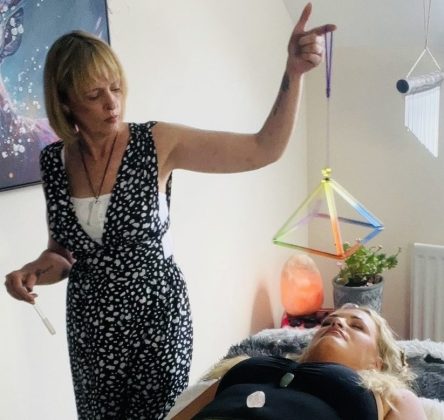
Singing bowls are metal or crystal bowls that create long, steady sounds when they are gently struck or circled with a mallet. You don’t need any special training to receive their benefits — you simply listen. The sound can feel like a gentle wave that washes through the room.
When we listen to these tones, the nervous system can begin to shift out of “high alert” and into more settled states. Studies looking at singing bowl therapy have found potential benefits for anxiety, depression, sleep, and overall mental wellbeing, including changes in brain activity linked with relaxation and emotional processing.
In everyday language, this means:
- The body can soften: muscles may relax, the jaw may unclench, and the breath can become a little deeper.
- The mind can quieten: thoughts may feel less crowded, and it can become easier to notice one moment at a time.
- Sleep may improve: some people report falling asleep more easily or feeling more rested after sound sessions.
- Emotions can move: tears, warmth, or a sense of relief can arise as the body feels safe enough to feel.
You don’t have to “believe” in anything for this to work. Sound is vibration. Your body is made of cells that respond to vibration. The bowls simply offer a steady, kind signal that says: “It is okay to soften for a moment.”
Grief, Sound, and Evidence‑Based Care
My work at Unity With Clare is rooted in somatic awareness, intuition, and lived experience — and it sits alongside evidence‑based mental health guidance. In the UK, including Northern Ireland, the National Institute for Health and Care Excellence (NICE) provides trusted frameworks for mental health and wellbeing.
Sound therapy is not a replacement for medical or psychological care. However, research in music‑based and sound‑based therapies suggests that certain tones and frequencies can influence areas of the brain involved in emotion, memory, and regulation, and may help reduce anxiety and improve sleep in some people.
You can explore NICE’s mental wellbeing guidance here:
NICE Mental Wellbeing Overview
How to Receive This Sound Bath (Even If You’re New)
You don’t need any special equipment to receive this sound bath — just a phone, tablet, or computer and a pair of headphones or speakers. If you have headphones, they can help you feel more “inside” the sound, but they are not essential.
A simple way to listen:
- Find a comfortable position: sitting or lying down, with your back supported.
- Let your hands rest: on your lap, your heart, or your belly — wherever feels safe.
- Press play: allow the sound to fill the space. You don’t have to focus or “meditate” perfectly.
- Notice your breath: if it feels okay, gently lengthen the exhale, as if you’re sighing out a little tension.
- Allow whatever comes: tears, numbness, warmth, or nothing at all — all of it is welcome.
A Birthday Gift for My Mummy, and for You
Creating this sound bath on what would have been my mummy’s birthday is my way of saying: her love continues in the work I do, in the care I offer, and in every person who finds a moment of softness here. Grief is love with nowhere to go — so today, I’m letting some of that love move through sound.
If you are carrying your own loss — a parent, a partner, a child, a friend, or a version of yourself you no longer recognise — I hope this sound bath offers you a small pocket of safety. You deserve moments of peace, even when the world feels broken. Your nervous system deserves kindness.
Important Note
If you are under the care of a GP, therapist, or mental health team, please continue following their guidance. This sound bath is a supportive practice — not a substitute for medical or crisis care. If you are in immediate distress or crisis, please contact emergency services or your local crisis support line.
“Sound doesn’t force you to heal — it simply creates the conditions where healing becomes possible.”
“Your nervous system understands frequency long before it understands words.”